It is
currently the hottest part of the year here in my corner of Senegal, and that
means too hot for me to make coherent thoughts or blog posts. I figured a fun alternative would be a photo
essay (of sorts) of what I've been seeing these last three weeks in my village.
WHAT DO YOU SEE IN SENEGAL IN THE
HOT SEASON?
Peace
Corps Volunteers biking with strange cargo on their bikes
 |
My
friends J.J. and Kait about to bike 30 km on dirt paths back to site. J.J. had been gone a while so he wanted to
buy his family a nice present... like a chicken to eat the day after he got
back. Only in Senegal, you can't buy
nicely packages chicken breasts or frozen chickens. You can only buy live ones. So J.J. headed off to the market, bought the
chicken, and attached it (quite creatively, might I add) to his bike for the
ride.
|
 |
Another
of my colleagues, Allie, could be spotted this hot season biking back from our
road town where she'd bought a hose for her men's garden. Notice the ingenious positioning of the object! Allowing for ease of movement and minimizing
the cumbersome weight.
|
Erin's tree nursery, with special appearances by her little helpers (aka, my brothers)
So new
trees are hardier and have a higher survival rate, we PCVs extend the 'tree
sack' or other pre-rainy season nursery techniques. You get the trees started in a controlled,
shaded, protected environment before transplanting them after the first
rains. I helped with several live fences
(thorny or poisonous tree species that deter pests and last longer than fencing)
for gardens, trees within gardens, and cashew orchards that we are establishing
in the area. My personal nursery has
cashew, two types of pigeon pea, citrus, Luciana, Meringa, and papaya.
 |
Amet
(age 2), with cashew seeds.
|
 |
| Ada (age 3), planting away! |
 |
Abibo (age 5), making holes for the pigeon pea
seeds.
|
 |
My
flamboyant, a shade tree with red leaves.
|
Napping boys in my hut in the afternoons!
 |
| Mom! I don't nap in your room, I never sleep! |

 |
Ok boys, I called your bluff. |
All the cool kids playing 'UNO' after I broke out the cards
 |
I must
confess, I was impressed the kids caught on so quickly since my explanations
left much to be desired. I don't know
the word for 'reverse' in Wolof, or 'skip,' so I named these "mix
up!" and "don't play!" respectively. They love to scream those out when they lay
it down, "ABALAI! DON'T PLAY!"
|
 |
Even the
elusive teenagers have been spotted with the cards, though you have to stalk
them to get any evidence.
|
Huge piles of 'demb' rinds
 |
My older
mom, Awa Top, peeling and halving demb fruit.
At the peak of the hot season there are space pickings for fruits,
vegetables, or leaves to cook. Thankfully,
the local bush fruit called 'demb' is in season and every woman prepares a
couple pounds of it for the sauce on our nightly ground millet.
|
 |
Another
of those huge piles! On the stick bed,
you can see dehydrating fruits. You can
either serve them stewed or dehydrated.
I much prefer the stewed version as they soak up the sauce they cook
in. The dehydrated version is like a dry
rub of Senegalese spices... on dry ground millet. Not quite to my taste, but interesting
nonetheless.
|
Endless Shelling of Peanuts
 |
With the
end of the peanut harvest last December, I joined the village in the months of
peanut shelling that ensued. I acquired calluses
on my fingers and learned how to conjugate a lot of basic Wolof verbs back
then. I thought that was behind us, but
it was not to be! Here in the peanut
basin, it was unusual for us to take a couple months off peanut shelling. Now we are back at it, shelling and sorting
the second you sit down so the best peanuts can be planted when the rains come.
|
 |
| Sifting through the peanuts. |
A distinct lack of vegetables
 |
Nothing
is growing. It is almost impossible to
preserve fruits and vegetables here.
Hence my role here to combat food insecurity. A perfect example of this is my lunch,
maffe. White rice with a ground peanut
and hot pepper sauce. Not all that
nutritious, but give us a couple more months and that sauce will have carrots,
potatoes, cabbage, eggplant, and other vegetables again.
|


My 'wannek' garden
Everywhere
else, it's brown and only trees and old bushes with deep tap roots have green
leaves on them. I'm trying out my green
thumb in my backyard (wannek) and these are my pre-rainy season nurseries thus far.
 |
| A cucumber nursery. |
 |
| Banana, basil, cucumbers, and mint. |

 |
| A spaghetti squash nursery, I hope it survives this Senegalese heat! |
New huts being built
 |
This is
the slowest time of the year for farmers.
You can start some nurseries and prepare your fields, but it is too hot
for even Senegalese to do too much work.
Instead, this is the time that jobs usually secondary to agriculture get
done. Like building huts. This is a typical hut in an impoverished
community like mine. Bricks made out of
mud (not very stable, especially in the rainy season), woods beams for the
roof, and thatch to keep the weather out.
People with more money build with concrete and metal, but even those
families have at least one or two of these typical huts in their compounds.
|
 |
Making
thatch! After laying out the tall grass,
it is wrapped handful by handful in strips of tree bark to make these long
lines of thatch which get wrapped around the roofs.

Matching Outfits

'Mama Yassine' teaching kids how to make faces

 |
| Part of my job description? No. But it was too hot to work. Call it a 'cultural exchange.' It's been so hot we haven't been able to do much but sit around and make faces at each other. I've learned (and taught) quite a bit. |
Petite, the latest addition to our family
 |
When we
adopted my puppy Yussa Ndor, one of his litter mates started hanging around the
village. This last month, my brother
decided he would adopt her too. She's
much sweeter than Yussa Ndor, and better behaved. The two of them are always up to no good...
or napping.
|

Malaria Education
 |
I helped
with two malaria education programs at different schools this past month. With rainy season comes standing water. With standing water comes mosquitoes. With mosquitoes comes malaria. Every individual in my family has had
malaria. In 2010, over 660,000 people died from malaria- most
of them in Africa. The programs we did
discussed malaria prevention (mosquito nets (proper usage and care), limiting
standing water) and treatment (go to the
health post!). The program was fun
because it incorporated soccer, so the kids were pretty excited about it!
|
 |
| Usually, boys don't wash clothes or mosquito nets. We decided to do some impromptu gender equality work and taught the boys to wash as well. |
 |
| Checking for holes in need of sewing up. |
A mini-training on tree nurseries
 |
| This past week, I held a small training with the seven women of the Escale Women's Group. I taught them how to make tree sacks, protect the nursery, and decide which trees were best for their community garden. |
 |
Sifting
the dirt and manure for the tree sacks.
|
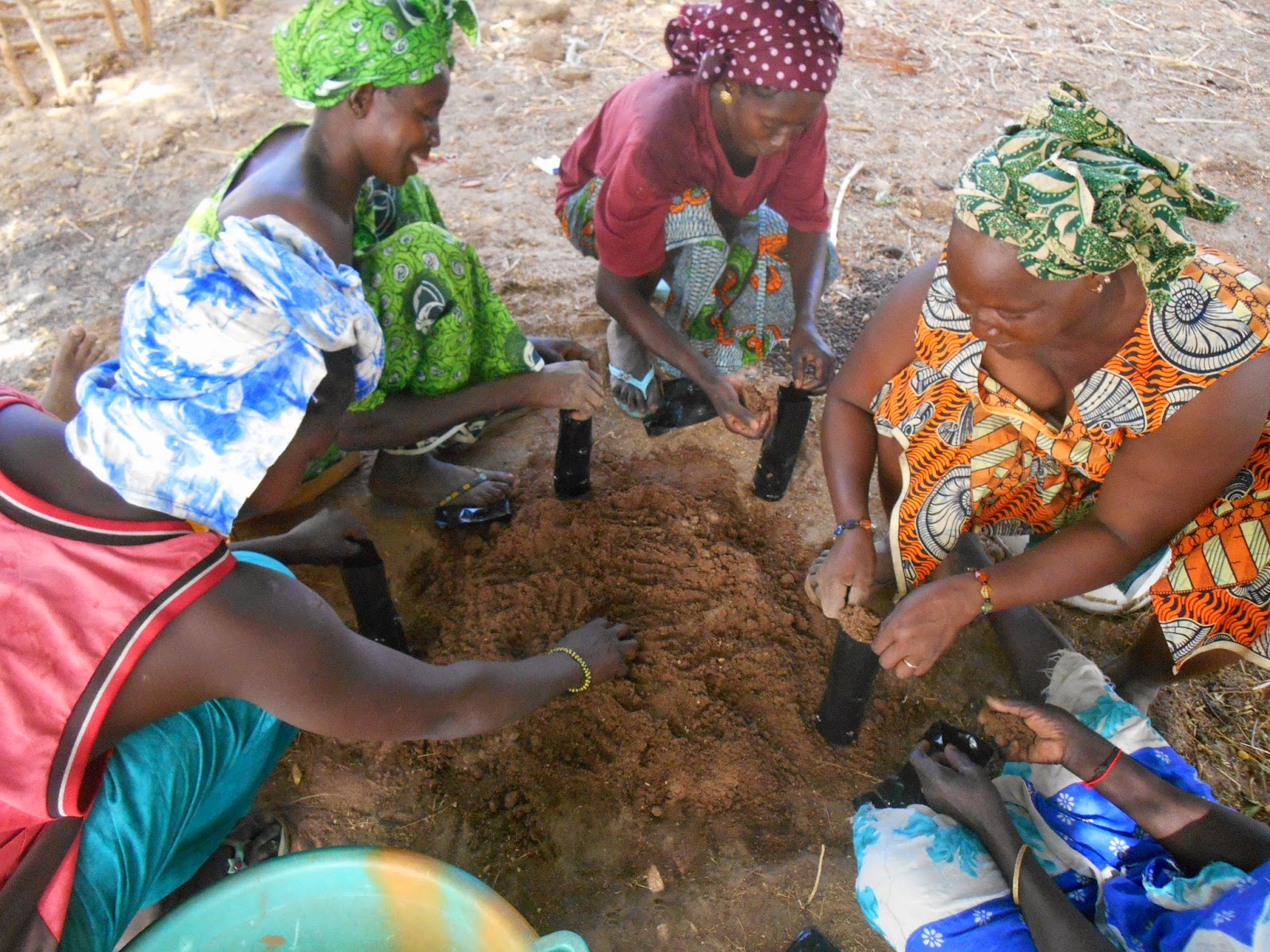 |
Filling
the sacks.
|
 |
Putting
the sacks in the nursery hole, protected with wood ash and neem leaves.
|
Hot Pepper Nurseries
 |
Hot
pepper is one of the most coveted, and profitable, crops in Senegal. Most women have their own hot pepper gardens
and this is the time to start the nurseries!
They prepare the soil, plant the seeds, keep them under mosquito-type
netting propped up with sticks to protect from insects, covered in grass to
protect from the sun, and water daily.
When the rains come and the peppers are big enough, they'll be
transplanted to the river garden.
|


