Between December 20 and 22, a
trio of us Peace Corps Volunteers toured around the Koungheul region teaching
about the agricultural, economic, and health benefits of Moringa
oleifera. By bush taxi, donkey cart, horse cart, and a 1950's
era-esque station wagon, Min Cho, Erica Peery, and I traversed the Peanut Basin. Our catchphrase was that Moringa is 'easy,
important for your family, and an income-generating opportunity.'
 Moringa
oleifera is a tree native to Africa
and Asia that is easy to grow in Senegal and is high in nutrients. Leaves, seeds, and powder from the tree are
rich in Protein, Vitamin A, Vitamin B, Vitamin C, Calcium, Iron, Magnesium,
Phosphorous, Potassium, and Zinc. A handful
of leaves per child per day can fill almost a third of their protein
requirement alone. In development work,
Moringa is used to combat maternal and youth malnutrition. Agriculturally, Moringa helps combat desertification
(a problem the Sahel Desert poses for Senegal) and improves garden spaces. Since Senegalese women are familiar with cooking certain Moringa-based dishes and we
decided there was a niche for us to fill!
Through small meetings targeting
women who are mothers, cook for their families, and have small gardens we met
with fifty one members in four communities.
We're taking a hiatus for the holidays, but will soon resume our
Moringa-education tour.
Moringa
oleifera is a tree native to Africa
and Asia that is easy to grow in Senegal and is high in nutrients. Leaves, seeds, and powder from the tree are
rich in Protein, Vitamin A, Vitamin B, Vitamin C, Calcium, Iron, Magnesium,
Phosphorous, Potassium, and Zinc. A handful
of leaves per child per day can fill almost a third of their protein
requirement alone. In development work,
Moringa is used to combat maternal and youth malnutrition. Agriculturally, Moringa helps combat desertification
(a problem the Sahel Desert poses for Senegal) and improves garden spaces. Since Senegalese women are familiar with cooking certain Moringa-based dishes and we
decided there was a niche for us to fill!
Through small meetings targeting
women who are mothers, cook for their families, and have small gardens we met
with fifty one members in four communities.
We're taking a hiatus for the holidays, but will soon resume our
Moringa-education tour.
 Erica, our Health PCV, explained the nutritional
importance of Moringa for families. The
leaves are already used in rural Senegal's most common dinner dish, leaf sauce
with millet couscous (mboum). On fancy
occasions, Moringa leaves are used for fish stuffing in the national dish of
fish, vegetables, and rice (ceeb u jen).
Erica explained how to increase the amount of Moringa in a family's diet
by mixing Moringa powder into two other favorite Senegalese dishes, a
peanut-based sauce on rice (maffe) or ground peanuts with rice (mbaxal). Overcooking the leaves is a common problem,
so we discussed proper preparation techniques.
The women who attended were excited to learn that an ingredient they are
familiar with and find delicious can be so beneficial for their children.
Erica, our Health PCV, explained the nutritional
importance of Moringa for families. The
leaves are already used in rural Senegal's most common dinner dish, leaf sauce
with millet couscous (mboum). On fancy
occasions, Moringa leaves are used for fish stuffing in the national dish of
fish, vegetables, and rice (ceeb u jen).
Erica explained how to increase the amount of Moringa in a family's diet
by mixing Moringa powder into two other favorite Senegalese dishes, a
peanut-based sauce on rice (maffe) or ground peanuts with rice (mbaxal). Overcooking the leaves is a common problem,
so we discussed proper preparation techniques.
The women who attended were excited to learn that an ingredient they are
familiar with and find delicious can be so beneficial for their children.
Agriculturally, I emphasized the ease of
Moringa. Needing little water, it is the
perfect tree for your backyard or garden.
It can go next to your shower. As
part of your live fence. Inside a
vegetable bed. In an alley row between
crops. It increases soil water retention. Provides dappled shade. On top of which it produces leaves, timber,
and seeds that can be used for human or animal consumption. We provided small
bags of Moringa seeds and our new volunteers will gain data collection
experience in a couple months by checking how many trees each attendee planted
and monitoring the cooking methods adoption rates.
 Finally, Min explained the economic aspect of
Moringa. This was unfamiliar to the
women we spoke with. We explained how
the leaves, seeds, and powder can all also be sold. The attendees agreed that fellow mothers
would be the most likely clientele for Moringa leaves and powder, while farmers
would most likely be interested in buying seeds. Local markets, individual vendors within
villages, and boutiques (small local stores) were designated as ideal locations
for selling. Perhaps the most fun part
of each training was practicing marketing.
Min and I would act out a scenario as Moringa sellers in a market, then
turn to the audience. Women took turns
practicing different marketing techniques (ie explaining the nutritional value
or ease of cooking with the product) and men practiced advertising with
seeds. It was an excellent method to see
how much material was retained!
Finally, Min explained the economic aspect of
Moringa. This was unfamiliar to the
women we spoke with. We explained how
the leaves, seeds, and powder can all also be sold. The attendees agreed that fellow mothers
would be the most likely clientele for Moringa leaves and powder, while farmers
would most likely be interested in buying seeds. Local markets, individual vendors within
villages, and boutiques (small local stores) were designated as ideal locations
for selling. Perhaps the most fun part
of each training was practicing marketing.
Min and I would act out a scenario as Moringa sellers in a market, then
turn to the audience. Women took turns
practicing different marketing techniques (ie explaining the nutritional value
or ease of cooking with the product) and men practiced advertising with
seeds. It was an excellent method to see
how much material was retained!
Beyond our own villages, we visited new volunteers'
sites, providing them with an opportunity to practice mobilizing their
community and teaching in their local languages. Tina Verrilli, Abby
Augarten, and Rita Argus reveled in spontaneous
applause from their communities after each of their brief introductory
speeches. After a tough few months of
cultural adjustments and language struggles, it was wonderful to see their
smiles when their host communities recognized their linguistic
achievements! Those of us who traveled
around from village to village enjoyed the variety of the Senegalese
countryside and hospitality. We learned
about wooden peanut-cracking paddles, new dance moves, and where the best
breakfast ladies are set up across the region.
 While the tourney was a resounding success, there
were more than a couple of snags. Though
we planned the day for our visits months in advance, a last minute political
rally required the attendance of my entire village. So we cancelled the first stop in the tour. More last minute local plans meant we had to
cancel our third stop. Halfway through
day two, Min was curled up in pain from a terrible, undetermined illness. Our horse-cart got a flat tire. Our station wagon driver mutinied on us in a
rural village, demanding extra payment because the women were taking "too
long" to cook lunch. We almost left
Tina's cat in the wrong village. All is
well though! We'll reschedule the
canceled stops. Min made it home and is
healing. The tire has been fixed. And we made it to our regional house in one
piece- including the cat.
While the tourney was a resounding success, there
were more than a couple of snags. Though
we planned the day for our visits months in advance, a last minute political
rally required the attendance of my entire village. So we cancelled the first stop in the tour. More last minute local plans meant we had to
cancel our third stop. Halfway through
day two, Min was curled up in pain from a terrible, undetermined illness. Our horse-cart got a flat tire. Our station wagon driver mutinied on us in a
rural village, demanding extra payment because the women were taking "too
long" to cook lunch. We almost left
Tina's cat in the wrong village. All is
well though! We'll reschedule the
canceled stops. Min made it home and is
healing. The tire has been fixed. And we made it to our regional house in one
piece- including the cat.
It's been a successful year. As I start celebrating the holidays, I'm
thankful for my host community, Peace Corps family, and support group from back
home who have all championed me. I've
been able to integrate into a wonderful community and be a part of so many
meaningful projects. Thank you to all
and happy holidays!
Moringa leaves, seeds, or powder? You can sell or eat them all!
Min and I sorting out Moringa seed bags - Our donkey cart
Stop #1: Keur Samba
Stop #2: Koumbidia
Stop #3: Koungheul Soce, some good laughs and data collection going on!
Enjoying a brief break and cracking peanuts.
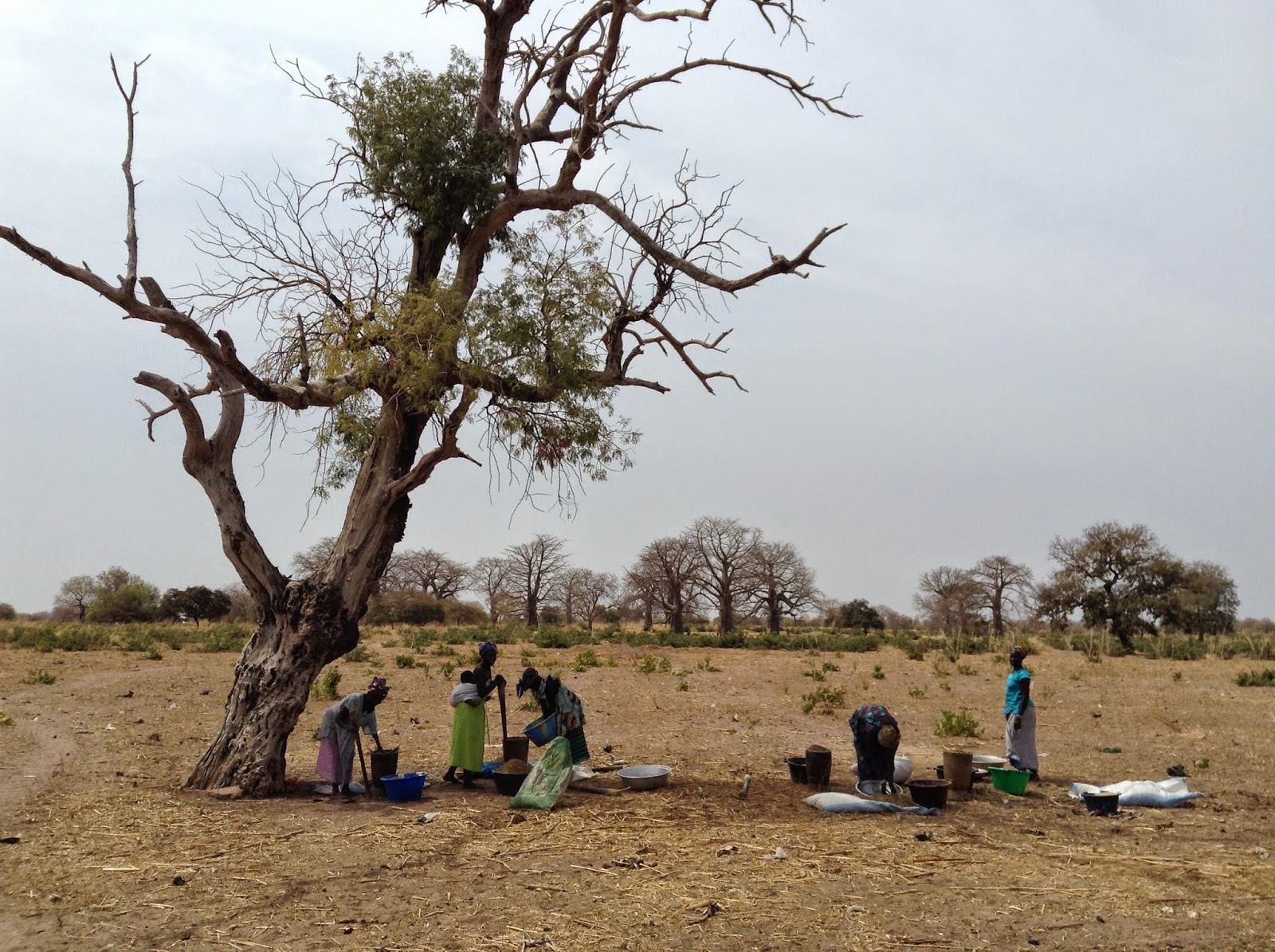
Stop #4: Tiaba Willane, look at the mature line of Moringa in the background
Erica, our Health PCV, speaks Mandinka. Since most of our audiences were Wolof-speakers, she used this opportunity to have local work partners translate for her. It was an excellent, inadvertent, training of trainers.
Min and I demonstrating how to sell Moringa - Women in Tiaba Willane practicing marketing Moringa products

Peace Corps Volunteers on the move! Time to get out of the bush and start celebrating a successful tournee!
Don't forget the cat!